Ensemble Learning with Randomized Sparse Mixed-Scale Networks
Authors: Eric Roberts and Petrus Zwart
E-mail: PHZwart@lbl.gov, EJRoberts@lbl.gov
We will train 13 different randomized sparse mixed-scale networks (SMSNets) to perform binary segmentation of retinal vessels on the Structured Analysis of the Retina (STARE) dataset.
After training, we combine the best performing networks into a single estimator and return both the mean and standard deviation of the estimated class probabilities. We subsequently use conformal estimation to get calibrated conformal sets that are guaranteed to contain the right label, with user-specified probability.
Imports and helper functions
[1]:
import numpy as np
import pandas as pd
import math
import torch
import torch.nn as nn
from torch.nn import functional
import torch.optim as optim
from torch.utils.data import TensorDataset
import torchvision
from torchvision import transforms
from dlsia.core import helpers
from dlsia.core import train_scripts
from dlsia.core.networks import smsnet
from dlsia.core.networks import baggins
from dlsia.core.conformalize import conformalize_segmentation
from dlsia.viz_tools import plots
from dlsia.viz_tools import draw_sparse_network
import matplotlib.pyplot as plt
import einops
import os
[2]:
# we need to unzip images
import gzip, shutil, fnmatch
def gunzip(file_path,output_path):
with gzip.open(file_path,"rb") as f_in, open(output_path,"wb") as f_out:
shutil.copyfileobj(f_in, f_out)
os.remove(file_path)
def unzip_directory(directory):
walker = os.walk(directory)
for directory,dirs,files in walker:
for f in files:
if fnmatch.fnmatch(f,"*.gz"):
gunzip(directory+f,directory+f.replace(".gz",""))
Download and view data
First, we need to download the STARE data, a dataset for semantic segmentation of retinal blood vessel commonly used as a benchmark.
All data will be stored in a freshly created directory titled tmp/STARE_DATA
[3]:
import requests, tarfile
# make directories
path_to_data = "/tmp/"
if not os.path.isdir(path_to_data+'STARE_DATA'):
os.mkdir(path_to_data+'STARE_DATA')
os.mkdir(path_to_data+'STARE_DATA/images')
os.mkdir(path_to_data+'STARE_DATA/labels')
# get the data first
url = 'https://cecas.clemson.edu/~ahoover/stare/probing/stare-images.tar'
r = requests.get(url, allow_redirects=True)
tmp = open(path_to_data+'STARE_DATA/stare-vessels.tar', 'wb').write(r.content)
my_tar = tarfile.open(path_to_data+'STARE_DATA/stare-vessels.tar')
my_tar.extractall(path_to_data+'STARE_DATA/images/')
my_tar.close()
unzip_directory(path_to_data+'STARE_DATA/images/')
# get the ah-labels
url = 'https://cecas.clemson.edu/~ahoover/stare/probing/labels-ah.tar'
r = requests.get(url, allow_redirects=True)
tmp = open(path_to_data+'STARE_DATA/labels-ah.tar', 'wb').write(r.content)
my_tar = tarfile.open(path_to_data+'STARE_DATA/labels-ah.tar')
my_tar.extractall(path_to_data+'STARE_DATA/labels/')
my_tar.close()
unzip_directory(path_to_data+'STARE_DATA/labels/')
Transform data
Here we cast all images from numpy arrays to pytorch tensors and prep data for training
[4]:
dataset = torchvision.datasets.ImageFolder(path_to_data+"STARE_DATA/", transform=transforms.ToTensor())
images = [np.array(dataset[i][0].permute(1,2,0)) for i in range(len(dataset)) if dataset[i][1] == 0]
images = torch.stack([torch.Tensor(image).permute(2, 0, 1) for image in images])
labels = torch.stack([dataset[i][0] for i in range(len(dataset)) if dataset[i][1] == 1])
labels = torch.sum(labels, dim=1)
labels = torch.unsqueeze(labels, 1)
labels = torch.where(labels != 0, 1, 0)
#make if divisional friendly
images = images[:,:,:600,:]
labels = labels[:,:,:600,:]
downsample_factor=2
images = functional.interpolate(images,
size=(images.shape[-2]//downsample_factor,
images.shape[-1]//downsample_factor),
mode="bilinear")
labels = functional.interpolate(labels.type(torch.FloatTensor),
size=(labels.shape[-2]//downsample_factor,
labels.shape[-1]//downsample_factor),
mode="nearest")
all_ds = TensorDataset(images,labels)
test_ds = TensorDataset(images[0:2],labels[0:2].type(torch.LongTensor))
val_ds = TensorDataset(images[2:3],labels[2:3].type(torch.LongTensor))
train_ds = TensorDataset(images[3:],labels[3:].type(torch.LongTensor))
print("Size of train dataset:", len(train_ds))
print("Size of validation dataset:", len(val_ds))
print("Size of test dataset:", len(test_ds))
Size of train dataset: 17
Size of validation dataset: 1
Size of test dataset: 2
View data
[5]:
params = {}
params["title"]="Image and Labels"
img = images[0].permute(1,2,0)
lbl = labels[0][0]
fig = plots.plot_rgb_and_labels(img.numpy(), lbl.numpy(), params)
fig.update_layout(width=700)
plt.figure(dpi=25)
plt.tight_layout()
fig.show()
<Figure size 160x120 with 0 Axes>
Dataloader class
We make liberal use of the PyTorch Dataloader class for easy handling and iterative loading of data into the networks and models.
With the chosen batch_size of 2, training requires roughly 4.5 to 6.0 GBs of GPU memory. Please note, memory comsumption is not static as network connectivity/sparsity is not static.
[6]:
# create data loaders
num_workers = 0
train_loader_params = {'batch_size': 2,
'shuffle': True,
'num_workers': num_workers,
'pin_memory':False,
'drop_last': False}
test_loader_params = {'batch_size': len(test_ds),
'shuffle': False,
'num_workers': num_workers,
'pin_memory':False,
'drop_last': False}
train_loader = torch.utils.data.DataLoader(train_ds, **train_loader_params)
val_loader = torch.utils.data.DataLoader(val_ds, **train_loader_params)
test_loader = torch.utils.data.DataLoader(test_ds, **test_loader_params)
print(train_ds.tensors[0].shape)
torch.Size([17, 3, 300, 350])
Create random sparse networks
Define SMSNet (Sparse Mixed-Scale Network) architecture-governing hyperparameters here.
Specify hyperparameters
First, each random network will have the same number of layers/nodes. These hyperparameters dicate the layout, or topology, of all networks.
[7]:
in_channels = 3 # RGB input image
out_channels = 2 # binary output
# we will use 15 hidden layers (typical MSDNets are >50)
num_layers = 15
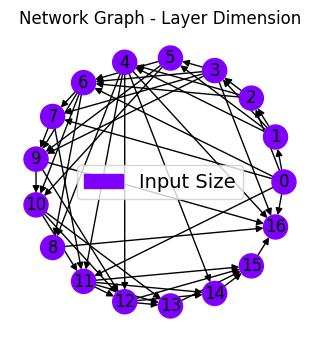
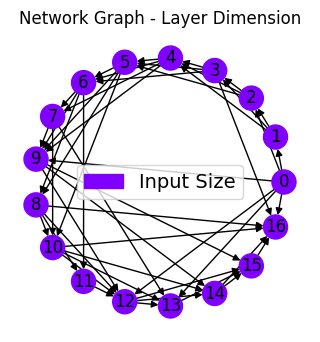
Next, the hyperparameters below govern the random network connectivity. Choices include:
alpha : modifies distribution of consecutive connection length between network layers/nodes,
gamma : modifies distribution of of layer/node degree,
IL : probability of connection between Input node and Layer node,
IO : probability of connection between Input node and Output node,
LO : probability of connection between Layer node and Output node,
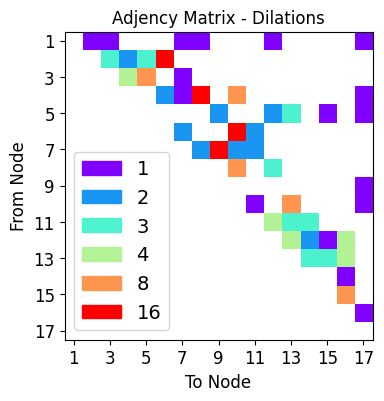
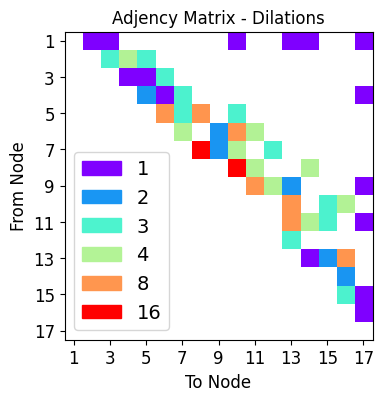
dilation_choices : set of possible dilations along each individual node connection
The specific parameters and what they do are described in detail in the documentation. Please follow minor minor comments below for a more cursory explanation.
[8]:
# When alpha > 0, short-range skip connections are favoured
alpha = 0.50
# When gamma is 0, the degree of each node is chosen uniformly between 0 and max_k
# specifically, P(degree) \propto degree^-gamma
gamma = 0.0
# we can limit the maximum and minimum degree of our graph
max_k = 5
min_k = 3
# features channel posibilities per edge
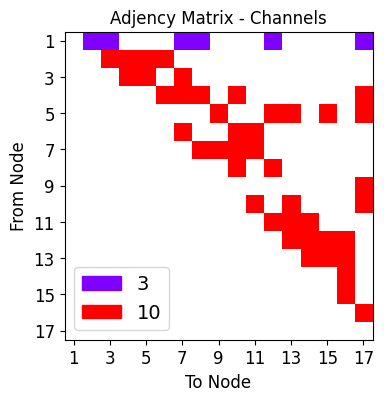
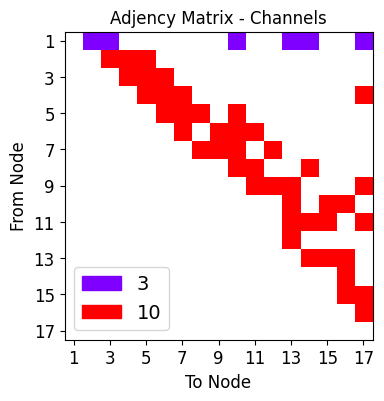
hidden_out_channels = [10]
# possible dilation choices
dilation_choices = [1,2,3,4,8,16]
# Here are some parameters that define how networks are drawn at random
# the layer probabilities dictionairy define connections
layer_probabilities={'LL_alpha':alpha,
'LL_gamma': gamma,
'LL_max_degree':max_k,
'LL_min_degree':min_k,
'IL': 0.25,
'LO': 0.25,
'IO': True}
# if desired, one can introduce scale changes (down and upsample)
# a not-so-thorough look indicates that this isn't really super beneficial
# in the model systems we looked at
sizing_settings = {'stride_base':2, #better keep this at 2
'min_power': 0,
'max_power': 0}
# defines the type of network we want to build
network_type = "Classification"
Build networks and train
We specify the number of random networks to initialize and the number of epochs for each is trained.
[9]:
# build the networks
nets = [] # we want to store a number of them
performance = [] # and keep track of how well they do
n_networks = 7 # number of random networks to create
epochs = 10 # set number of training epochs
Training loop
Now we cycle through each individual network and train.
[10]:
for ii in range(n_networks):
torch.cuda.empty_cache()
print("Network %i"%(ii+1))
net = smsnet.random_SMS_network(in_channels=in_channels,
out_channels=out_channels,
in_shape=(300,300),
out_shape=(300,300),
sizing_settings=sizing_settings,
layers=num_layers,\
dilation_choices=dilation_choices,
hidden_out_channels=hidden_out_channels,
layer_probabilities=layer_probabilities,
network_type=network_type)
# lets plot the network
net_plot,dil_plot,chan_plot = draw_sparse_network.draw_network(net)
plt.figure(dpi=25)
plt.show()
nets.append(net)
print("Start training")
pytorch_total_params = sum(p.numel() for p in net.parameters() if p.requires_grad)
print("Total number of refineable parameters: ", pytorch_total_params)
weights = torch.tensor([1.0,2.0]).to('cuda')
criterion = nn.CrossEntropyLoss(weight=weights) # For segmenting
learning_rate = 1e-3
optimizer = optim.Adam(net.parameters(), lr=learning_rate)
device = helpers.get_device()
net = net.to(device)
tmp = train_scripts.train_segmentation(net,
train_loader,
test_loader,
epochs,
criterion,
optimizer,
device,
show=10)
performance.append(tmp[1]["F1 validation macro"][tmp[1]["Best model index"]])
net.save_network_parameters("stare_sms_%i.pt"%ii)
net = net.cpu()
plots.plot_training_results_segmentation(tmp[1]).show()
# clear out unnecessary variables from device (GPU) memory after each network
torch.cuda.empty_cache()
Network 1
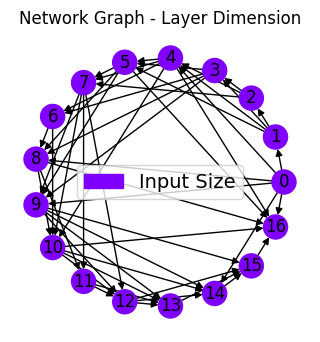
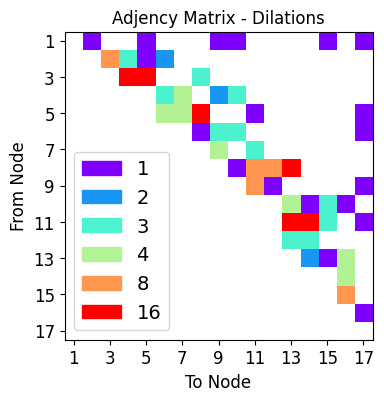
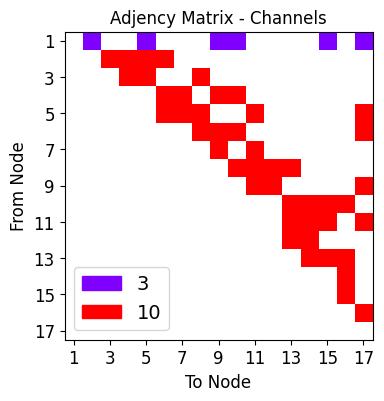
<Figure size 160x120 with 0 Axes>
Start training
Total number of refineable parameters: 94858
Epoch 10 of 10 | Learning rate 1.000e-03
Training Loss: 1.5663e-01 | Validation Loss: 1.9539e-01
Micro Training F1: 0.9549 | Micro Validation F1: 0.9425
Macro Training F1: 0.8443 | Macro Validation F1: 0.7863
Network 2
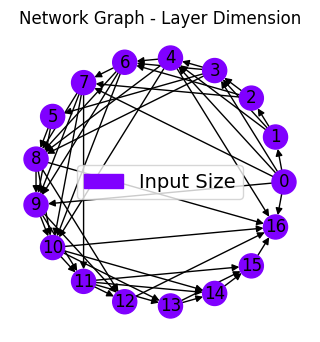
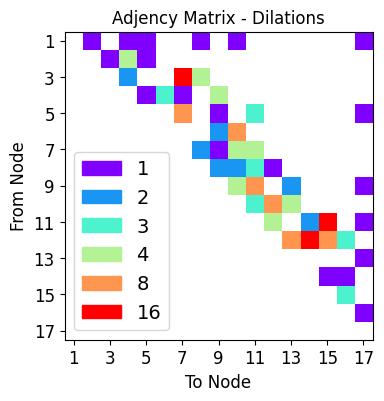
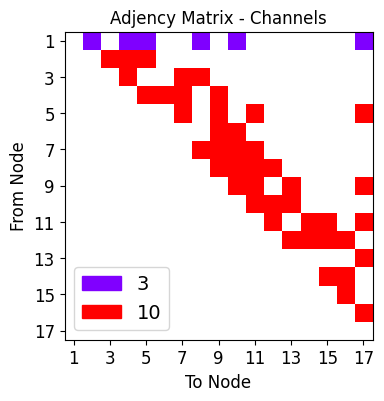
<Figure size 160x120 with 0 Axes>
Start training
Total number of refineable parameters: 98238
Epoch 10 of 10 | Learning rate 1.000e-03
Training Loss: 1.4278e-01 | Validation Loss: 1.7614e-01
Micro Training F1: 0.9588 | Micro Validation F1: 0.9485
Macro Training F1: 0.8585 | Macro Validation F1: 0.8110
Network 3
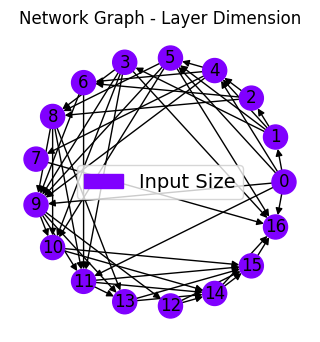
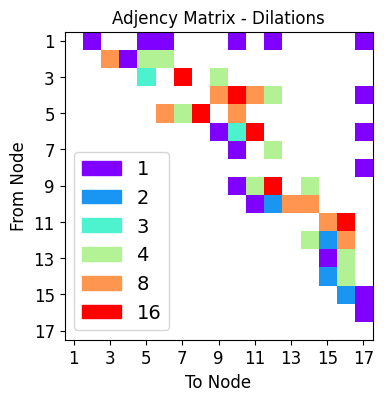
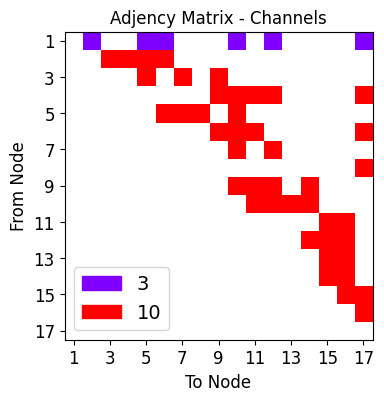
<Figure size 160x120 with 0 Axes>
Start training
Total number of refineable parameters: 88078
Epoch 10 of 10 | Learning rate 1.000e-03
Training Loss: 1.6323e-01 | Validation Loss: 1.9523e-01
Micro Training F1: 0.9556 | Micro Validation F1: 0.9439
Macro Training F1: 0.8384 | Macro Validation F1: 0.7984
Network 4
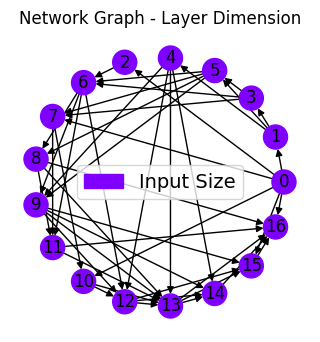
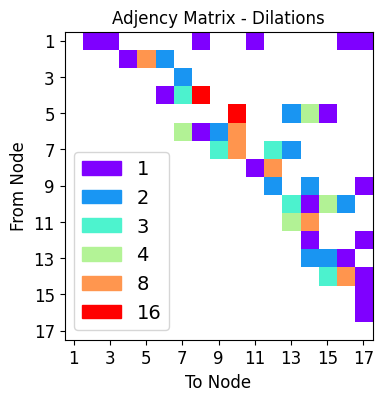
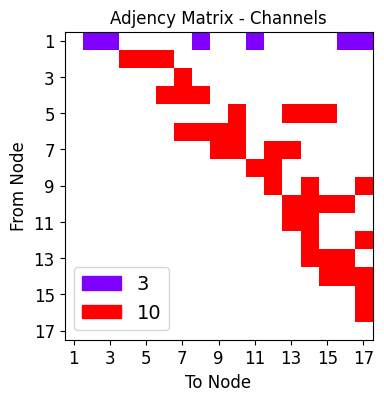
<Figure size 160x120 with 0 Axes>
Start training
Total number of refineable parameters: 74088
Epoch 10 of 10 | Learning rate 1.000e-03
Training Loss: 1.6424e-01 | Validation Loss: 1.8995e-01
Micro Training F1: 0.9551 | Micro Validation F1: 0.9443
Macro Training F1: 0.8385 | Macro Validation F1: 0.7940
Network 5
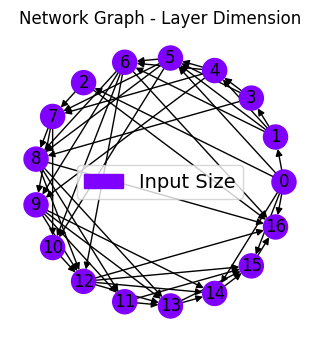
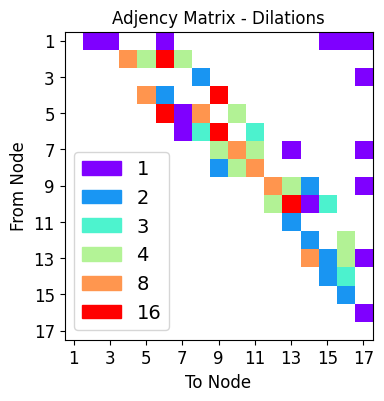
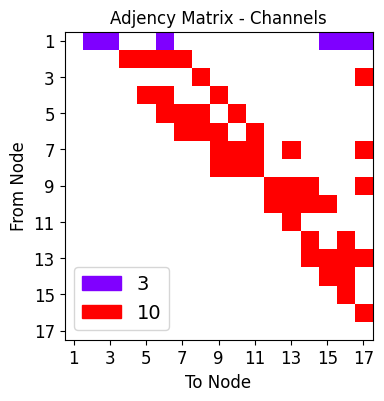
<Figure size 160x120 with 0 Axes>
Start training
Total number of refineable parameters: 94278
Epoch 10 of 10 | Learning rate 1.000e-03
Training Loss: 2.0019e-01 | Validation Loss: 2.1542e-01
Micro Training F1: 0.9480 | Micro Validation F1: 0.9409
Macro Training F1: 0.8016 | Macro Validation F1: 0.7588
Network 6
<Figure size 160x120 with 0 Axes>
Start training
Total number of refineable parameters: 86978
Epoch 10 of 10 | Learning rate 1.000e-03
Training Loss: 1.5282e-01 | Validation Loss: 1.8299e-01
Micro Training F1: 0.9568 | Micro Validation F1: 0.9455
Macro Training F1: 0.8492 | Macro Validation F1: 0.7999
Network 7
<Figure size 160x120 with 0 Axes>
Start training
Total number of refineable parameters: 94928
Epoch 10 of 10 | Learning rate 1.000e-03
Training Loss: 2.1428e-01 | Validation Loss: 2.3745e-01
Micro Training F1: 0.9449 | Micro Validation F1: 0.9316
Macro Training F1: 0.7923 | Macro Validation F1: 0.7468
Network evaluation
Select networks based on performance to build a conformal estimator.
PyMSDtorch conformal operations and documentation can be found in pyMSDtorch/core/conformalize directory.
[11]:
sel = np.where(np.array(performance) > 0.78 )[0]
these_nets = []
for ii in sel:
these_nets.append(nets[ii])
bagged_model = baggins.model_baggin(these_nets,"classification", False)
conf_obj = conformalize_segmentation.build_conformalizer_classify(bagged_model,
test_loader,
alpha=0.10,
missing_label=-1,
device='cuda:0',
norma=True)
Conformal estimation
In conformal estimation, we need to decide upon a confidence limit alpha. If desired, the parameter alpha can be changed. The lower it gets, the more ‘noise’ is included in the conformal set. We will set this value at 5% for now, and choose to select all pixels that has a ‘vein’ classification in their set as a possible ‘vein’ pixel.
[12]:
alpha = 0.10
conf_obj.recalibrate(alpha)
conformal_set = conf_obj(bagged_model(images[0:1]))
possible_veins = conformalize_segmentation.has_label_in_set(conformal_set,1)
mean_p, std_p = bagged_model(images[0:1], 'cuda:0', True)
View results
[13]:
params = {}
params["title"]="Image and Labels - Ground Truth"
img = images[0].permute(1,2,0).numpy()
lbl = labels[0,0].numpy()
fig = plots.plot_rgb_and_labels(img, lbl, params)
fig.update_layout(width=700)
plt.figure(dpi=25)
fig.show()
params["title"]="Image and Labels - Estimated labels (conformal alpha = %3.2f )"%alpha
img = images[0].permute(1,2,0).numpy()
lbl = labels[0,0].numpy()
fig = plots.plot_rgb_and_labels(img, possible_veins.numpy()[0], params)
fig.update_layout(width=700)
plt.figure(dpi=25)
fig.show()
params["title"]="Image and Class Probability Map"
img = images[0].permute(1,2,0).numpy()
lbl = labels[0,0].numpy()
fig = plots.plot_rgb_and_labels(img, mean_p.numpy()[0,1], params)
fig.update_layout(width=700)
plt.figure(dpi=25)
fig.show()
params["title"]="Image and Uncertainty of Estimated labels"
img = images[0].permute(1,2,0).numpy()
lbl = labels[0,0].numpy()
fig = plots.plot_rgb_and_labels(img, std_p.numpy()[0,1], params)
fig.update_layout(width=700)
plt.figure(dpi=25)
fig.show()
<Figure size 160x120 with 0 Axes>
<Figure size 160x120 with 0 Axes>
<Figure size 160x120 with 0 Axes>
<Figure size 160x120 with 0 Axes>
F1 performance metrics
[14]:
F1_score_labels = train_scripts.segmentation_metrics(mean_p, labels[0:1,0,...].type(torch.LongTensor))
print( "Micro F1: %5.4f"%F1_score_labels[0].item())
print( "Macro F1: %5.4f"%F1_score_labels[1].item())
Micro F1: 0.9512
Macro F1: 0.8374
[15]:
!ls -lh
total 69M
-rw-rw-r-- 1 ejroberts ejroberts 615 Jan 26 14:35 copy_all.py
-rw-rw-r-- 1 ejroberts ejroberts 5.9M Feb 6 00:11 denoising_MSDNet_SMSNetEnsemble.ipynb
-rw-rw-r-- 1 ejroberts ejroberts 1.4M Feb 5 22:55 denoising_selfSupervised.ipynb
-rw-rw-r-- 1 ejroberts ejroberts 5.7M Feb 6 10:09 ensembleLearning_SMSNets.ipynb
drwxrwxr-x 2 ejroberts ejroberts 4.0K Jan 27 12:43 ensembleNetworks
-rw-rw-r-- 1 ejroberts ejroberts 5.6M Feb 5 23:08 imageClassification_SMSNetAutoencoderEnsemble.ipynb
-rw-rw-r-- 1 ejroberts ejroberts 4.3M Feb 5 23:08 imageClassification_SMSNetEnsemble.ipynb
-rw-rw-r-- 1 ejroberts ejroberts 0 Jan 26 14:35 __init__.py
-rw-rw-r-- 1 ejroberts ejroberts 859K Feb 5 23:10 latentSpaceExploration_SMSNetAutoencoders.ipynb
-rwxrwxr-x 1 ejroberts ejroberts 1.3K Feb 5 12:42 run_all.sh
-rw-rw-r-- 1 ejroberts ejroberts 30K Feb 5 23:10 saving_loading_networks.ipynb
-rw-rw-r-- 1 ejroberts ejroberts 4.4M Feb 6 10:20 segmentation_MSDNet_TUNet_TUNet3plus.ipynb
-rw-rw-r-- 1 ejroberts ejroberts 441K Feb 6 10:23 stare_sms_0.pt
-rw-rw-r-- 1 ejroberts ejroberts 452K Feb 6 10:23 stare_sms_1.pt
-rw-rw-r-- 1 ejroberts ejroberts 412K Feb 6 10:23 stare_sms_2.pt
-rw-rw-r-- 1 ejroberts ejroberts 353K Feb 6 10:23 stare_sms_3.pt
-rw-rw-r-- 1 ejroberts ejroberts 437K Feb 6 10:23 stare_sms_4.pt
-rw-rw-r-- 1 ejroberts ejroberts 407K Feb 6 10:23 stare_sms_5.pt
-rw-rw-r-- 1 ejroberts ejroberts 439K Feb 6 10:23 stare_sms_6.pt
-rw-rw-r-- 1 ejroberts ejroberts 2.4M Feb 5 22:51 test_data_2d.hdf5
-rw-rw-r-- 1 ejroberts ejroberts 127K Feb 5 23:10 this_msdnet.pt
-rw-rw-r-- 1 ejroberts ejroberts 91K Feb 5 23:10 this_smsnet.pt
-rw-rw-r-- 1 ejroberts ejroberts 1.9M Feb 6 10:20 this_tunet.pt
-rw-rw-r-- 1 ejroberts ejroberts 970K Feb 5 21:05 torchviewNotebook.ipynb
-rw-rw-r-- 1 ejroberts ejroberts 4.7M Feb 5 22:51 train_data_2d.hdf5
-rw-rw-r-- 1 ejroberts ejroberts 17M Feb 5 23:39 tutorialsBackup.tar.gz
-rw-rw-r-- 1 ejroberts ejroberts 2.4M Feb 5 22:51 validate_data_2d.hdf5
-rw-rw-r-- 1 ejroberts ejroberts 4.9M Jan 26 19:04 zzz_Autoencode_and_Label.ipynb
-rw-rw-r-- 1 ejroberts ejroberts 4.7M Jan 25 09:32 zzz_tutorial_semantic_segmentation.ipynb